
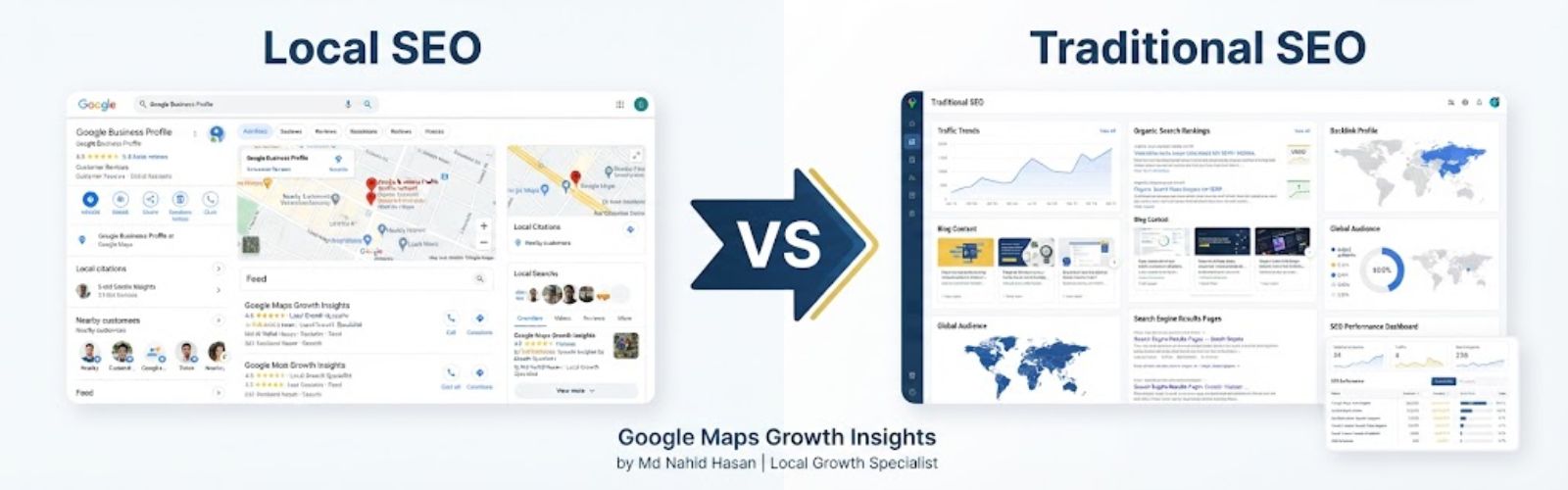
Understanding Local SEO vs Traditional SEO is one of the most important steps for businesses that want to improve their online visibility. While both strategies help businesses appear in search results they are designed for different audiences and different business goals.
Many small business owners invest time and money into SEO without realizing that a traditional SEO strategy may not be the best approach for a business serving customers in a specific city or service area.
For example a local plumbing company has very different marketing goals than an online software company selling products worldwide.
This guide explains the differences between Local SEO and Traditional SEO, when each strategy works best and how businesses can choose the right approach for sustainable growth.
Local SEO vs Traditional SEO
Featured Answer:
Local SEO vs Traditional SEO comes down to search intent and audience. Local SEO focuses on helping businesses appear in location-based searches such as Google Maps and Google Search for nearby customers. Traditional SEO focuses on improving website visibility for broader organic searches without depending on a physical location.
Businesses that serve local customers usually benefit more from Local SEO while businesses selling products or services nationally or globally often rely more heavily on Traditional SEO.
What Is Local SEO?
Local SEO is the process of improving a business's visibility in local search results.
Its primary goal is helping nearby customers discover your business when searching for products or services within a specific geographic area.
Instead of targeting everyone Local SEO focuses on reaching people who are most likely to become customers because they are located near your business or within your service area.
Purpose Of Local SEO
The goal of Local SEO is helping businesses appear when potential customers search for local services.
Examples include:
- Emergency plumber near me
- Dentist in Chicago
- HVAC repair Dallas
- Auto repair shop nearby
- Best electrician in Melbourne
These searches show clear local intent because the customer wants a nearby business instead of general information.
Google Business Profile
One of the most important parts of Local SEO is Google Business Profile Optimization strategy.
Your profile provides Google with important information including:
- Business name
- Business category
- Address
- Phone number
- Website
- Business hours
- Services
- Photos
- Customer reviews
A complete and accurate profile helps customers understand your business while supporting Google Maps visibility.
Google Maps SEO
Google Maps SEO is a major part of Local SEO.
Many customers never visit traditional search results because they choose businesses directly from Google Maps.
Businesses appearing in Google Maps often receive:
- More phone calls
- More direction requests
- More website visits
- More customer inquiries
Learning how to rank higher on Google Maps usually requires optimizing your Google Business Profile, maintaining accurate business information, collecting genuine reviews and building strong local trust signals.
Local Search Intent
Local intent means the searcher wants a business within a particular city, neighborhood or service area.
Google understands these searches by combining keywords with the searcher's location.
For example someone searching for "roof repair" may see completely different businesses depending on where they are located.
This makes Local SEO especially valuable for businesses that rely on nearby customers.
Local Citations
Local citations are online mentions of your business information across trusted websites and directories.
Consistent citations help reinforce your business information and improve customer confidence.
Accurate citation management is an important part of a complete Local SEO strategy.
Customer Reviews
Reviews influence both customer trust and local visibility.
Potential customers often compare businesses by reading reviews before deciding who to contact.
Encouraging genuine customer feedback and responding professionally helps build credibility over time.
What Is Traditional SEO?
Traditional SEO focuses on improving a website's visibility in organic search results without targeting a specific geographic area.
The goal is attracting visitors from broader searches that may come from anywhere in the country or around the world.
This strategy is commonly used by businesses that do not depend on serving customers in one physical location.
Purpose Of Traditional SEO
Traditional SEO helps websites rank for informational, commercial and transactional keywords that are not tied to a specific city or region.
Examples include:
- Best CRM software
- How to improve website speed
- Email marketing tips
- SEO tools comparison
- Project management software
These searches focus on finding information, products or services regardless of the user's location.
Organic Search Visibility
Traditional SEO aims to increase website traffic from organic search results.
Businesses often create blog articles, service pages, buying guides and educational resources that answer common customer questions.
Publishing helpful content consistently can improve visibility across many different search queries.
Content Marketing
Content plays a central role in Traditional SEO.
Businesses create valuable articles, tutorials, case studies and industry resources that help users solve problems.
Helpful content also supports topical authority and long-term organic growth.
Technical SEO
Traditional SEO includes improving the technical performance of a website.
Areas commonly optimized include:
- Website speed
- Mobile usability
- Internal linking
- Structured data
- Indexing
- Crawlability
A technically sound website helps search engines understand content more efficiently.
Backlinks
Backlinks remain an important trust signal for Traditional SEO.
When reputable websites reference your content it helps demonstrate authority within your industry.
High-quality backlinks combined with useful content often contribute to stronger long-term organic visibility.
Local SEO vs Traditional SEO: Key Differences
Understanding Local SEO vs Traditional SEO helps business owners invest in the right marketing strategy. While both approaches aim to increase online visibility they target different audiences, ranking factors and customer journeys.
The table below highlights the main differences.
Local SEO vs Traditional SEO: Key Differences
| Factor | Local SEO | Traditional SEO |
|---|---|---|
| Target Audience | Customers in a specific location | National or global audiences |
| Search Intent | Location-based searches | General informational or commercial searches |
| Primary Goal | Generate local leads and visits | Increase website traffic |
| Google Business Profile | Essential | Usually not required |
| Google Maps | Major ranking factor | Not a primary focus |
| Keywords | Location-focused keywords | Broad industry keywords |
| Customer Reviews | Highly important | Helpful but less influential |
| Local Citations | Important trust signal | Usually unnecessary |
| Website Optimization | Supports local relevance | Supports overall organic rankings |
| Conversion | Calls, bookings and store visits | Website traffic, leads and sales |
Rather than choosing one strategy over the other businesses should first understand how customers search for their products or services.
Target Audience
The biggest difference in Local SEO vs Traditional SEO is the audience.
Local SEO targets customers within a defined service area while Traditional SEO focuses on reaching people regardless of location.
A plumbing company serving Dallas has very different marketing goals from an online software company selling worldwide.
Search Intent
Search intent plays a major role in determining which strategy is appropriate.
Someone searching for "electrician near me" wants immediate local help.
Someone searching for "how electricity works" is looking for educational information.
Matching your SEO strategy with customer intent helps attract more relevant visitors.
Ranking Factors
Traditional SEO relies heavily on website quality, helpful content, technical optimization and backlinks.
Local SEO includes many of these factors but also considers business relevance, Google Business Profile optimization, customer reviews, local citations and proximity.
Businesses serving local customers should pay attention to both website optimization and local trust signals.
Google Business Profile
A Google Business Profile is one of the most important assets for Local SEO.
It provides customers with essential business information and helps businesses appear in Google Maps and local search results.
Traditional SEO does not usually depend on a Google Business Profile because many websites target audiences beyond a specific location.
Keywords
Keyword research also differs between these strategies.
Local SEO targets location-specific phrases such as:
- Plumber in Houston
- Emergency electrician London
- Dentist near me
- Roof repair Sydney
Traditional SEO often targets broader keywords such as:
- Email marketing software
- SEO checklist
- Website optimization guide
- Content marketing strategy
Choosing keywords that match customer intent usually produces better long-term results.
Competition
Local businesses typically compete against companies within their city or service area.
Traditional SEO often involves competing with websites from around the world.
This difference affects keyword difficulty and the overall SEO strategy.
Customer Reviews
Reviews influence purchasing decisions in almost every industry.
For Local SEO reviews also contribute to customer trust and profile engagement.
Responding professionally to customer feedback demonstrates credibility and improves the overall customer experience.
Local Citations
Local citations help verify your business information across trusted directories.
Consistent citations strengthen business credibility while supporting local search visibility.
Traditional SEO generally places less emphasis on citation management.
Website Optimization
Both strategies benefit from a well-optimized website.
Fast loading pages, mobile-friendly design, helpful content and clear navigation improve user experience regardless of your SEO approach.
For Local SEO your website should also include service pages, location-focused content and accurate contact information.
Conversions
The final difference in Local SEO vs Traditional SEO is the type of conversion each strategy aims to achieve.
Local businesses often measure success through:
- Phone calls
- Appointment bookings
- Direction requests
- Contact form submissions
- Walk-in customers
Traditional SEO commonly focuses on:
- Organic website traffic
- Newsletter signups
- Online purchases
- Lead generation
- Content engagement
Which Businesses Need Local SEO?
Businesses serving customers within a specific city or service area usually benefit most from Local SEO.
These businesses rely on nearby customers who are actively searching for services.
Examples include:
- Plumbers
- Electricians
- HVAC companies
- Dentists
- Law firms
- Restaurants
- Auto repair shops
- Real estate agents
- Contractors
- Medical clinics
- Home service companies
For these businesses improving Google Business Profile optimization, customer reviews, local citations and Google Maps visibility often has a direct impact on customer inquiries.
Which Businesses Benefit More From Traditional SEO?
Some businesses are not limited by geography.
Their customers may come from anywhere in the country or around the world.
These businesses often benefit more from Traditional SEO.
Examples include:
- SaaS companies
- Online stores
- Affiliate websites
- Blogs
- National brands
- Global businesses
- Online education platforms
- Digital product companies
These businesses typically invest more heavily in content marketing, technical SEO, backlink acquisition and broad keyword targeting.
Can Local SEO And Traditional SEO Work Together?
Absolutely.
For many businesses the strongest strategy combines the best elements of both approaches.
A local business can optimize its Google Business Profile while also publishing helpful blog articles that attract organic website traffic.
This combination creates more opportunities to reach customers throughout different stages of their buying journey.
Website Optimization
A fast, mobile-friendly website supports both Local SEO and Traditional SEO.
Google Business Profile
Your Google Business Profile helps customers discover your business through Google Maps and local search results.
Helpful Blog Content
Educational blog articles answer customer questions while building topical authority within your industry.
Local Landing Pages
Location-specific pages help businesses target multiple cities or service areas without creating duplicate content.
Technical SEO
Improving website speed, structured data, internal linking and crawlability benefits every type of SEO strategy.
Backlinks
High-quality backlinks strengthen website authority regardless of whether your audience is local or national.
Local Citations
Accurate citations reinforce your business information and complement your Google Business Profile. Learn how to build local citations that support long-term Local SEO growth.
Review Management
Consistently collecting genuine customer reviews and responding professionally helps build trust while supporting long-term Local SEO growth.
Businesses that combine Local SEO with Traditional SEO often create a stronger digital presence because they improve both their website and their local business visibility at the same time.
Common Local SEO Mistakes
Even businesses with a well-designed website can struggle to generate local leads if they overlook important Local SEO fundamentals. Understanding Local SEO vs Traditional SEO also means avoiding common mistakes that reduce your visibility in local search results.
Ignoring Google Business Profile
Your Google Business Profile is one of the strongest local search assets available. An incomplete profile with missing services, outdated business hours or limited photos can reduce customer trust and engagement.
Choosing The Wrong Business Categories
Your primary and secondary categories help Google understand what your business offers. Selecting categories that do not accurately represent your services may reduce your visibility for relevant searches.
Not Building Local Citations
Consistent citations help verify your business information across trusted websites. Ignoring citation management can weaken your local trust signals.
Poor Review Management
Customer reviews influence both trust and engagement. Responding professionally to reviews and encouraging genuine customer feedback helps strengthen your online reputation.
Weak Location Pages
Businesses serving multiple cities should create unique location pages that provide helpful information instead of publishing duplicate content.
Inconsistent NAP Information
Your business name, address and phone number should remain consistent across your website, Google Business Profile and business directories.
No Google Maps Strategy
Many businesses optimize their website but ignore Google Maps. For local service businesses both should work together to improve overall visibility.
Local SEO Best Practices
A successful Local SEO strategy focuses on helping customers while providing Google with accurate and trustworthy business information.
Optimize Your Google Business Profile
Complete every important section of your profile including services, categories, business description, photos and business attributes.
Build High-Quality Local Citations
Submit your business to trusted directories and maintain consistent NAP information across every listing.
Publish Helpful Content
Create blog articles that answer common customer questions and demonstrate your expertise within your industry.
Collect Genuine Reviews
Encourage satisfied customers to leave honest reviews and respond professionally to every review whenever possible.
Improve Website Performance
Fast loading pages, mobile-friendly design and clear navigation improve both user experience and search performance.
Create Local Landing Pages
If your business serves multiple locations create dedicated pages for each service area with unique and valuable content.
Optimize Images
Use descriptive file names, meaningful alt text and high-quality images that represent your business professionally.
Monitor Performance
Review Google Business Profile Insights, website analytics and customer interactions regularly to identify opportunities for improvement.
Local SEO Checklist
Use this checklist to strengthen your local search strategy.
- ✓ Google Business Profile fully optimized
- ✓ Consistent NAP information
- ✓ Local citations on trusted directories
- ✓ Genuine customer reviews
- ✓ Location pages created
- ✓ Internal linking implemented
- ✓ Image optimization completed
- ✓ Technical SEO reviewed
- ✓ Mobile-friendly website
- ✓ Performance monitored regularly
Frequently Asked Questions
What is the difference between Local SEO and Traditional SEO?
Local SEO focuses on helping businesses appear in location-based searches and Google Maps while Traditional SEO targets broader organic search results without a geographic focus.
Which is better for small businesses?
Businesses serving customers within a specific city or service area usually benefit more from Local SEO. Businesses selling nationally or internationally may rely more heavily on Traditional SEO.
Can I use both Local SEO and Traditional SEO?
Yes. Many businesses achieve the best long-term results by combining Local SEO with Traditional SEO. This approach improves local visibility while also growing organic website traffic.
Does Google Business Profile help SEO?
A well-optimized Google Business Profile supports Local SEO by improving visibility in Google Maps and local search results while helping customers discover important business information.
Does Local SEO improve Google Maps rankings?
Local SEO includes many factors that support Google Maps visibility such as Google Business Profile optimization, reviews, local citations and consistent business information.
How long does Local SEO take?
Results vary depending on your competition, industry and current online presence. Many businesses begin seeing measurable improvements after several months of consistent optimization.
Final Thoughts
Understanding Local SEO vs Traditional SEO helps businesses choose a strategy that aligns with their customers and business goals.
If your customers search for nearby services Local SEO should be a core part of your marketing strategy. If your audience is national or global Traditional SEO may play a larger role.
For many businesses the best solution is combining both approaches. A strong website supported by an optimized Google Business Profile, helpful content, customer reviews and accurate local citations creates a solid foundation for sustainable online growth.
About The Author
Md Nahid Hasan is a Google Business Profile and Local SEO Specialist helping businesses improve Google Maps visibility, local search performance and sustainable online growth.
He specializes in Google Business Profile Optimization, Google Maps SEO, Local Citation Building and practical Local SEO strategies that help businesses build stronger online visibility.
Want results like this for your business?
I'll review your current search presence and tell you exactly what's holding you back — no obligation, no fluff.
Get My Free SEO Audit